I’m not here to complain about the unjust double standards that women are held to or the “thin-spiration” messages that are sent to girls through so many ads, although those are real and prominent issues that many women and girls have to face, along with many other hindrances. I’m more focused on ways that we can improve and are improving these problems that women face, particularly in creative work fields. Do me a favor and think of your favorite movie. Chances are, the movie you just thought of was directed or written by a man. I know my favorite movie is. Now try thinking of a movie directed by a female with a female protagonist. I’m guessing you headed for the romantic comedy section and were a little confused when- the Sex and the City series was created by a man? Don’t get me wrong, I’m all for guys writing stories with female protagonists, but seeing that so many industries are dominated by men can be a little disheartening for ambitious young women out there. Fewer than 10% of film directors are women and less than 15% or screenwriters are women. Six percent of today’s films are created by women.Think about that-we are missing half of the population’s stories. A little daunting to try to start a living in the film industry when the statistics are less than in your favor.
I want to make films when I grow up. I realize that’s a lot to hope for, and if I do make it in the film industry, there are going to be a lot of soul-crushing nights spent alone with a tub of ice cream and a general lack of inspiration. But at least having the opportunity to create what I love and make a living off of that is enough for me. Being successful is another story. I’m not begging for men to back down from the pedestal they have in the film industry. All I want is for women to be celebrated and for female talent to be fostered-because more representation and diversity in the arts just means more quality. And that creates for better movies for everyone.
There are amazing organizations established exactly for this purpose, Bird’s Eye View being one of them. Their mission is to acclaim new female talent through film festivals and workshops for women. There are ongoing efforts to support female film directors, and I’m hoping to see more of that. I think of the greats out there-Sofia Coppola, a female filmmaker who challenges the barrier between male and female film directors; Lena Dunham, a personal inspiration of mine, who stars and writes her own show, Girls; as well as the fabulous Tina Fey. I look at these women who create so fervently and know that I want to be a part of that. I know there must be more than just 10%. I know there are more aspiring filmmakers out there.
I’m just hoping for the day when interviewers will no longer ask what it feels like to be a female director, a female comedian, a female writer. Someday there will no longer be a boundary between male and female creators. And I’ll be a part of it.

Thursday, January 10, 2013

Wednesday, January 2, 2013
To a Year Without Resolutions (#9)
2012. The year (for me) of the Olympics memes, election year idiocy, goodbyes, hellos, and maybe most importantly-adapting. A year ago I was a pretty aimless seventh grader drunk with the notion of living without goals and expectations. A year ago I didn't know anyone at this school existed. A year ago, I thought I was content. And I guess I was, but I'm not one to enjoy placid complacency much. A year later, and I'm just the same old soul that's read a few more books, sang a few new songs, and visited a few new places. So it goes.
I left my home of four years because I had to, and hoped that I could reinvent myself, a self which I had grown a little bored of. Pretty early on, I realized that doing so was a lot easier in theory. Within just a month of being here I concluded that the idea of "letting go of the past" was some BS that people write in self-help books because it sounds nice. I'm not bitter. Not to go all Holden Caulfield on you, but you really can't just wake up one morning and decide to erase your past. I've seen Eternal Sunshine and moved enough to know that.
 Not all of my epiphanies (if you are so generous to call them that) were all so cynical this year. I found that this past year was pretty excellent for me-with plenty of highs and lows, as is the case with every year. But I think in the soul-crushing, dreadfully long months of the summer, I came to find something really important for me; I'm not my surroundings. While where I live does play a large role in my life, I'm still my own person. Happiness isn't something I can find in the political boundaries on a map, nor in people. Happiness is something I can create for myself. At the end of the day, it's really not the place-it's the person. I'm ever-changing, ever-learning, ever-growing-figuring it out as I go, and maybe that's the fun of it all.
So as the clock found its way to the beginning of a fresh year, I found myself reflecting on my life through a series of inner-montages that I'd created in my head like any other normal teenager. Right? I'm not the type of person to throw myself into resolutions. I'm neither pro-resolutions nor anti-resolutions. I'm pro-make-it-a-damn-good-year-no-matter-what. And maybe not even "good", because who can control the circumstances they're thrown into? Maybe just make it a memorable year.
I don't have a resolution, partly because I'm perfect, but also because I'm more into the idea of setting small goals for myself. Like writing more, and improving social skills, and maybe becoming at least a little more organized (but let's be real, who am I kidding?). To quote Mindy Kaling,"Maybe I'll do one of those Eat, Pray, Love things. Ugh, I don't wanna pray. Forget it, I'll just die alone." I suppose mainly I just want to create more. Create things that I'm proud of and hope that other people enjoy those things. That is my happiness.
Happy New Year, guys.
I left my home of four years because I had to, and hoped that I could reinvent myself, a self which I had grown a little bored of. Pretty early on, I realized that doing so was a lot easier in theory. Within just a month of being here I concluded that the idea of "letting go of the past" was some BS that people write in self-help books because it sounds nice. I'm not bitter. Not to go all Holden Caulfield on you, but you really can't just wake up one morning and decide to erase your past. I've seen Eternal Sunshine and moved enough to know that.
 Not all of my epiphanies (if you are so generous to call them that) were all so cynical this year. I found that this past year was pretty excellent for me-with plenty of highs and lows, as is the case with every year. But I think in the soul-crushing, dreadfully long months of the summer, I came to find something really important for me; I'm not my surroundings. While where I live does play a large role in my life, I'm still my own person. Happiness isn't something I can find in the political boundaries on a map, nor in people. Happiness is something I can create for myself. At the end of the day, it's really not the place-it's the person. I'm ever-changing, ever-learning, ever-growing-figuring it out as I go, and maybe that's the fun of it all.
So as the clock found its way to the beginning of a fresh year, I found myself reflecting on my life through a series of inner-montages that I'd created in my head like any other normal teenager. Right? I'm not the type of person to throw myself into resolutions. I'm neither pro-resolutions nor anti-resolutions. I'm pro-make-it-a-damn-good-year-no-matter-what. And maybe not even "good", because who can control the circumstances they're thrown into? Maybe just make it a memorable year.
I don't have a resolution, partly because I'm perfect, but also because I'm more into the idea of setting small goals for myself. Like writing more, and improving social skills, and maybe becoming at least a little more organized (but let's be real, who am I kidding?). To quote Mindy Kaling,"Maybe I'll do one of those Eat, Pray, Love things. Ugh, I don't wanna pray. Forget it, I'll just die alone." I suppose mainly I just want to create more. Create things that I'm proud of and hope that other people enjoy those things. That is my happiness.
Happy New Year, guys.
Monday, December 17, 2012
But I Wanna Worship Pasta (#8)
Religion is a topic of huge controversy. It's something that is extremely important to some people, so much to the point that they will go to extremes just to spread their beliefs. Luckily, we have freedom of religion which protects us from a religiously biased government and from people that may try to force their beliefs down on us.
One question that came up in our class discussions about freedom of religion was,’How can you start a religion and have it officially recognized’.
As we have freedom of religion, you are able to practice whatever it is you wish, but in order to be a tax-exempt religious organization, you must have at least a few of the traits as follows, according to the IRS:
1. A distinct legal existence
2. A recognized creed and form of worship
3. A definite and distinct ecclesiastical government
4. A formal code of doctrine and discipline
5. A distinct religious history
6. A membership not associated with any other church or denomination
7. An organization of ordained ministers
8. Ordained ministers selected after completing prescribed studies
9. A literature of its own
10. Established places of worship
11. Regular congregations
12. Regular religious services
13. Sunday schools for religious instruction of the young
14. Schools for the preparation of its ministers.
I even found a book about starting your own religion, if that’s something you’re into. Apparently it’s a big way to rake in money and adoration. Go figure.
In some cases, starting your own religion can be dangerous and used in malice ways, as seen in the case of Jim Jones. In 1955, Jim Jones became the founder and leader of the “Peoples Temple”, a Christian-deriving belief system with a membership of 3,000. Jones used this belief system as a way to express his appreciation for Communism. “I decided, how can I demonstrate my Marxism? The thought was, infiltrate the church. So I consciously made a decision to look into that prospect.”
Perhaps one of the most disturbing things about Jones’ story was that he was an atheist. He didn’t believe in his own gospel, but merely used it as a way to celebrate the idea of Communism. Pretty messed up, right? Through this, he led what is now known as the Guyana Tragedy, a massive cult suicide that took place in Guyana during 1978.
So you can see the good and the bad here. We have freedom of religion and assembly, so we’re able to freely practice what we believe, but that can also lead to malevolence and abuse of that freedom. This whole study of the freedom of religion led me to wonder how freedom of religion extends to children. Parents can baptize and bring their children to church services, so when does a kid have the right to say no? In Germany, Switzerland, and Austria, there are explicit laws about children’s rights. If a child desires to follow a different belief system than that of their parents, even if their parents completely disprove of this, they are free to do so, by law. I don’t know about you, but to me, that’s beautiful. Freedom is awesome, am I right?
 So let’s put this in another context. If I wanted to become a Satan worshipper who drinks the blood of unicorns and my parents were evangelical Christians, by law, I would have the freedom to follow Satanism. That’s sort of an exaggerated example, but still.
I did quite a bit of research, but nothing was quite as explicit about children’s rights when it came to religious freedom in the U.S. We do, however, have freedom of thought, which I guess could encompass children’s rights. Obviously, there’s a lot of gray area.
But, you know, if you feel like worshipping pasta, go for it.
Sources: http://en.wikipedia.org/wiki/Freedom_of_religion
http://www.irs.gov/pub/irs-pdf/p1828.pdf
One question that came up in our class discussions about freedom of religion was,’How can you start a religion and have it officially recognized’.
As we have freedom of religion, you are able to practice whatever it is you wish, but in order to be a tax-exempt religious organization, you must have at least a few of the traits as follows, according to the IRS:
1. A distinct legal existence
2. A recognized creed and form of worship
3. A definite and distinct ecclesiastical government
4. A formal code of doctrine and discipline
5. A distinct religious history
6. A membership not associated with any other church or denomination
7. An organization of ordained ministers
8. Ordained ministers selected after completing prescribed studies
9. A literature of its own
10. Established places of worship
11. Regular congregations
12. Regular religious services
13. Sunday schools for religious instruction of the young
14. Schools for the preparation of its ministers.
I even found a book about starting your own religion, if that’s something you’re into. Apparently it’s a big way to rake in money and adoration. Go figure.
In some cases, starting your own religion can be dangerous and used in malice ways, as seen in the case of Jim Jones. In 1955, Jim Jones became the founder and leader of the “Peoples Temple”, a Christian-deriving belief system with a membership of 3,000. Jones used this belief system as a way to express his appreciation for Communism. “I decided, how can I demonstrate my Marxism? The thought was, infiltrate the church. So I consciously made a decision to look into that prospect.”
Perhaps one of the most disturbing things about Jones’ story was that he was an atheist. He didn’t believe in his own gospel, but merely used it as a way to celebrate the idea of Communism. Pretty messed up, right? Through this, he led what is now known as the Guyana Tragedy, a massive cult suicide that took place in Guyana during 1978.
So you can see the good and the bad here. We have freedom of religion and assembly, so we’re able to freely practice what we believe, but that can also lead to malevolence and abuse of that freedom. This whole study of the freedom of religion led me to wonder how freedom of religion extends to children. Parents can baptize and bring their children to church services, so when does a kid have the right to say no? In Germany, Switzerland, and Austria, there are explicit laws about children’s rights. If a child desires to follow a different belief system than that of their parents, even if their parents completely disprove of this, they are free to do so, by law. I don’t know about you, but to me, that’s beautiful. Freedom is awesome, am I right?
 So let’s put this in another context. If I wanted to become a Satan worshipper who drinks the blood of unicorns and my parents were evangelical Christians, by law, I would have the freedom to follow Satanism. That’s sort of an exaggerated example, but still.
 I did quite a bit of research, but nothing was quite as explicit about children’s rights when it came to religious freedom in the U.S. We do, however, have freedom of thought, which I guess could encompass children’s rights. Obviously, there’s a lot of gray area.
But, you know, if you feel like worshipping pasta, go for it.
Sources: http://en.wikipedia.org/wiki/Freedom_of_religion
http://www.irs.gov/pub/irs-pdf/p1828.pdf
Tuesday, December 4, 2012
A Revolution Without Riots is Rather Boring (#7)
Not to mention almost unheard of.
Stonewall Riots -1969
Photo source: http://www.stageandcinema.com/wp-content/uploads/2011/04/stonewall-uprising-police-push.jpg
Bibliography: http://en.wikipedia.org/wiki/Stonewall_riots
The Stonewall Riots were violent and spontaneous protests against a police raid at the Stonewall Inn of Greenwich Village in New York City. The protesters were members of the gay community, who opposed the discrimination against homosexuals. Of course, at the time, cultural views on homosexuality were even more conservative than they are now.
The raid consisted of female police officers starting a lineup to check the identities of the patrons and if they were dressed as women, they would be taken to the bathroom to check their sex. If they were men dressed as women (cross-dressers), they’d be arrested on the spot. Pretty intrusive, no? But instead of following this standard procedure, the police officers decided that they would take all the patrons that were present to the police station. At this point, both the police and the patrons felt an unsettling sense of danger looming.
 |
| The only photo of that first night, the patrons fight back against the police |
After the alcohol at the bar began to be transported, a crowd outside began to form. The passersby began to feel animosity towards the police officers and after a lesbian woman in handcuffs was beaten with a baton, the crowd went berserk.
Although there was never any official speaking done, the bystanders that had watched the scene unfold began to riot. The folk singer Dave Van Ronk began to take part in the protest as well, claiming that-although he was not gay himself-he had experienced police violence when he participated in anti-war protests and wanted to “stand up to the cops”. The incredible thing about this riot was that it wasn’t organized. Few of those who joined in on the demonstration were even homosexual themselves, but the turbulent changes and revolution of the era all seemed to come to a head, and in some unspoken way, they all felt compelled to take part in the demonstration.
Michael Fader explained,”All kinds of people, all different reasons, but mostly it was total outrage, anger, sorrow, everything combined, and everything just kind of ran its course.”
Garbage, rocks, and bricks were thrown at the Stonewall Inn by members of the queer community as a way to “tell off” the owners of the bar (the Mafia) for their discrimination. Though the series of riots only lasted a day, it was a huge marking period for the gay liberation movement. Since then, the Stonewall Riots have become a literal symbol of the queer community fighting back against an oppressive time, when queers were looked down upon.
Though what the police did was all for purpose of anti-homosexualism, it sparked just the opposite: Pride marches were started on the one-year anniversary of the police raid and two gay activist organizations were formed in New York.
And 42 years later, same-sex marriage was legalized in the state of New York. Ironic, much? I really connected with this protest, as a straight ally and on a more fundamentally human level. The fact that these people were fighting for acceptance was jarring and saddening, but maybe even empowering. While homophobia and discrimination is still a huge problem, we’re moving forward. I like to think that Freddie Mercury would be proud. Photo source: http://www.stageandcinema.com/wp-content/uploads/2011/04/stonewall-uprising-police-push.jpg
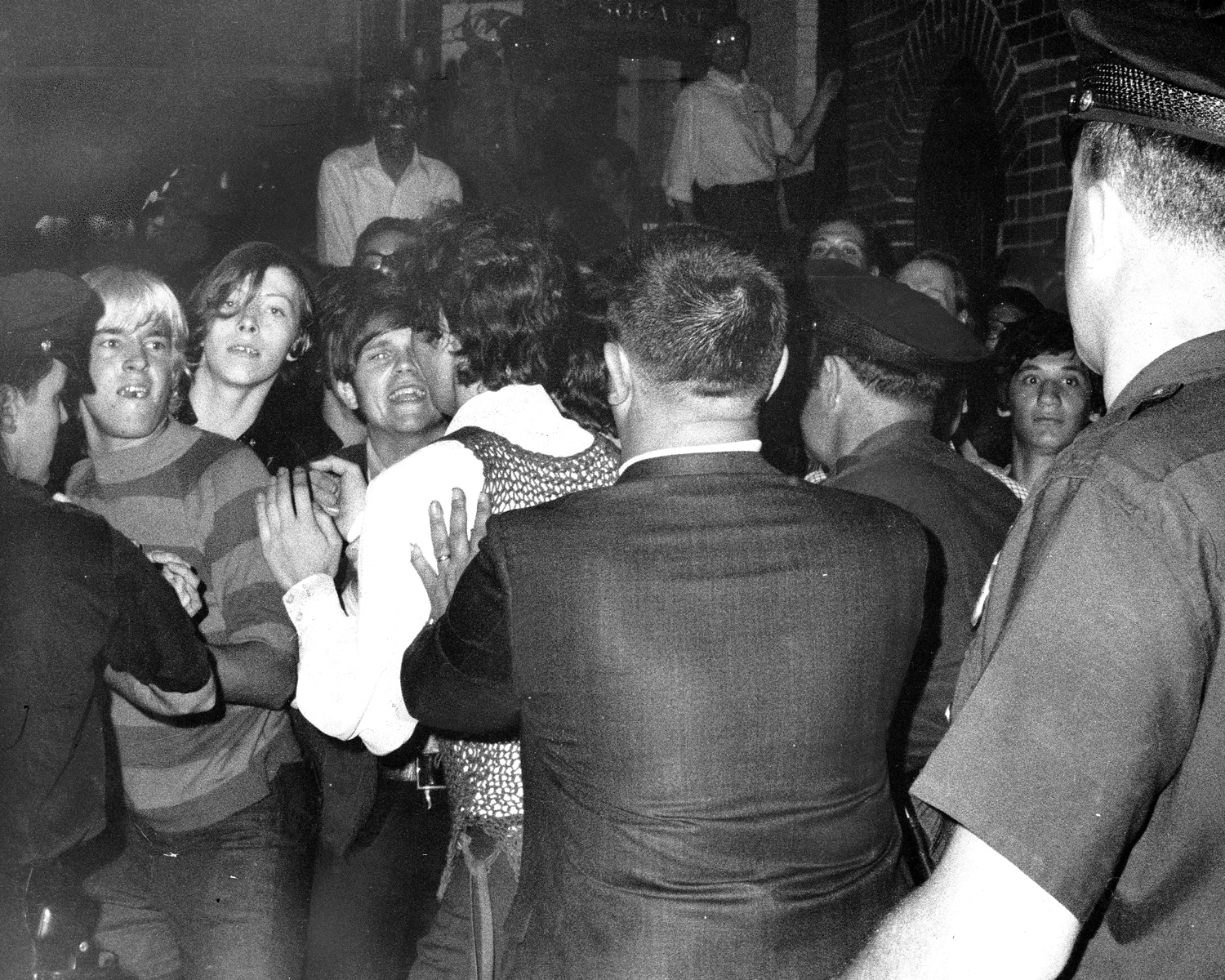
Bibliography: http://en.wikipedia.org/wiki/Stonewall_riots
Sunday, November 4, 2012
Don't Forget To Vote, America (#6)
It's November 4th, two days before the president of our country will be decided. I know, you're probably done with these political blog posts from pundits and every time one of those ads comes on you contemplate smashing that lovely plasma TV. I know. But we're almost done! At this point I think we're all feeling a bit like Abigael .
In my ROGATE class, we've started a unit on civics wherein we are discussing politics. If you know anything about me, you know that I have lots of opinions about lots, which means that the closest I come to a fistfight is a verbal smack down about social issues. You have no idea how happy that makes my parents.
As a refresher, here is a simple breakdown of left and right government:
Left Government Right Government
(Liberal, Democrats) (Conservative, Republicans)
-support “big government” -little government involvement
-support employees -support employers
-value equality over freedom -value freedom over equality
-social progress -social preservation
All of the stances on things like foreign policy, fiscal issues, and social issues stem from the above traits of each party. For instance, since Democrats value equality, they support same-sex marriage, whereas most Republicans oppose it. Frankly, I don't see why we even argue over this since it's a basic civil right, but apparently it's still debate material. Because Republicans believe in little government involvement they oppose things such as welfare and Obamacare, which Democrats support.
The main issues that I find most compelling are the economy, same-sex marriage, and contraception. My own opinion on the economy is that no amount of tax cuts or programs will help us to get out of this. I think that at this point taxes need to stay where they are or be raised for some people, in accordance with their income.
When it comes to same-sex marriage, my view is very simple: I support it. It deeply frustrates me that we're at a point where this is even an issue. I truly believe in equality and the fact that some people don't have that is, to me, repulsive. The only argument I have ever heard about this from politicians is that it "goes against [their] religion". This isn't even a valid argument because religion should not be the basis of your decision on something that will affect millions of people in our nation. You cannot classify America as one religion. We are a democracy not a theocracy. And what matters even more is that you are denying people marriage, something that is extremely personal and should be between the people getting married. "Love is a human experience, not a political statement."
The final issue that I feel very passionate about is abortion. The reason being is that I actually knew a girl who became pregnant because of a rape. She was a teenager, very young and her body could not sustain a fetus. She had an abortion and because of this was able to keep on with a fairly normal life and avoided any problematic pregnancy which could have lead to maternal death. It frustrates me that the government is even involved with something like this because the woman should be able to decide for herself-what is best for her. Men, please stop commenting on this issue. It makes me want to put your heads through a wall. Remember: "no uterus, no opinion". I hear religion getting tossed around in this issue a lot too, and I think it's another example of why the separation of church and state is so beneficial and essential to making unbiased decisions.
Conclusion: I politically identify myself as a Democrat, surprise, surprise. Also remember that it's great to express your opinions and beliefs, but separating friends and politics is a good rule to live by.
Happy election year, guys! Try not to lose your minds with the political propaganda.
The main issues that I find most compelling are the economy, same-sex marriage, and contraception. My own opinion on the economy is that no amount of tax cuts or programs will help us to get out of this. I think that at this point taxes need to stay where they are or be raised for some people, in accordance with their income.
When it comes to same-sex marriage, my view is very simple: I support it. It deeply frustrates me that we're at a point where this is even an issue. I truly believe in equality and the fact that some people don't have that is, to me, repulsive. The only argument I have ever heard about this from politicians is that it "goes against [their] religion". This isn't even a valid argument because religion should not be the basis of your decision on something that will affect millions of people in our nation. You cannot classify America as one religion. We are a democracy not a theocracy. And what matters even more is that you are denying people marriage, something that is extremely personal and should be between the people getting married. "Love is a human experience, not a political statement."
The final issue that I feel very passionate about is abortion. The reason being is that I actually knew a girl who became pregnant because of a rape. She was a teenager, very young and her body could not sustain a fetus. She had an abortion and because of this was able to keep on with a fairly normal life and avoided any problematic pregnancy which could have lead to maternal death. It frustrates me that the government is even involved with something like this because the woman should be able to decide for herself-what is best for her. Men, please stop commenting on this issue. It makes me want to put your heads through a wall. Remember: "no uterus, no opinion". I hear religion getting tossed around in this issue a lot too, and I think it's another example of why the separation of church and state is so beneficial and essential to making unbiased decisions.
Conclusion: I politically identify myself as a Democrat, surprise, surprise. Also remember that it's great to express your opinions and beliefs, but separating friends and politics is a good rule to live by.
Happy election year, guys! Try not to lose your minds with the political propaganda.
Friday, October 12, 2012
Hide the report card (#5)
What's the importance of grades? I mean, you could definitely argue that grading was created by teachers to make a social empire of students that will soon dominate the world with their intelligence; or you could say that grading is used to evaluate what their students are learning. Call it what you want.
In my younger and more vulnerable years, my father gave me a piece of advice that I've been turning over in my mind ever since.* Essentially, through a college professor-worthy lecture, my dad said that having the highest grades in my class should not be my goal, though incidentally that happened, rather progressing as a student over time. Cheesy, yes. But there's a lot of stock to that. You can't contol external factors; that inevitable duel with the new kid that ends up getting a better test grade than you. But you can control your self-growth.
I'll be honest. My first year of school was eye-opening. I won't bore you with my life's story, but basically I was the snarky, self-assured smart kid that stole the cheese off of kids' pizzas. Odd, yes. Unfortunately, I had a C in conduct/behavior and A's in all my other subjects. My parents were concerned with this, but after my teacher explained that stealing the cheese off of other kids' pizzas at my age was totally normal, they settled. In other words, my C in conduct was average. This is traditional grading; those report cards you take home with you that are splattered with 100s and 95s. There's nothing wrong with this way of grading, in my eyes. It's straightforward, simple enough, and it's what we've been using for a while. We associate these grades with different levels of knowledge and understanding. 98% on your spelling test? Sorry, that's not refrigerator-material, Johnny.
Look, we've developed this grand new grading system known as standards-based grading, coming to a school near you. What's this standards-based grading, you ask? Let me elaborate: it's an in-depth representation of what a kid knows. Instead of using letters and numbers to represent your understanding of a certain subject; the grades are partially proficient, proficient, and advanced proficient. Each grade is pretty self-explanatory and yet gives us a better look at what little Johnny is learning in school. He's partially proficient in spelling? Time to whip out the flash cards. It gives us more ground to build off of and you can really get a grasp for what areas you're strong in and the ones that need help.
Personally, I'm a fan of the standards-based grading. It's what my old school used to assess us last year and it was incredibly effective. For instance, if I was excellent at relaying current events through essays yet I was partially proficient when it came to world geography, I knew what to study. Snazzy, right? It's easy to see your growth in subjects over time through this method of grading.
'Tis all for now, readers. In between this blog post and the next time I grace the internet with my presence, enjoy this nifty little video.
Rock on, guys.
--Internet Superhero
*Gatsby references, folks. I'm just that cool.
In my younger and more vulnerable years, my father gave me a piece of advice that I've been turning over in my mind ever since.* Essentially, through a college professor-worthy lecture, my dad said that having the highest grades in my class should not be my goal, though incidentally that happened, rather progressing as a student over time. Cheesy, yes. But there's a lot of stock to that. You can't contol external factors; that inevitable duel with the new kid that ends up getting a better test grade than you. But you can control your self-growth.
I'll be honest. My first year of school was eye-opening. I won't bore you with my life's story, but basically I was the snarky, self-assured smart kid that stole the cheese off of kids' pizzas. Odd, yes. Unfortunately, I had a C in conduct/behavior and A's in all my other subjects. My parents were concerned with this, but after my teacher explained that stealing the cheese off of other kids' pizzas at my age was totally normal, they settled. In other words, my C in conduct was average. This is traditional grading; those report cards you take home with you that are splattered with 100s and 95s. There's nothing wrong with this way of grading, in my eyes. It's straightforward, simple enough, and it's what we've been using for a while. We associate these grades with different levels of knowledge and understanding. 98% on your spelling test? Sorry, that's not refrigerator-material, Johnny.
Look, we've developed this grand new grading system known as standards-based grading, coming to a school near you. What's this standards-based grading, you ask? Let me elaborate: it's an in-depth representation of what a kid knows. Instead of using letters and numbers to represent your understanding of a certain subject; the grades are partially proficient, proficient, and advanced proficient. Each grade is pretty self-explanatory and yet gives us a better look at what little Johnny is learning in school. He's partially proficient in spelling? Time to whip out the flash cards. It gives us more ground to build off of and you can really get a grasp for what areas you're strong in and the ones that need help.
Personally, I'm a fan of the standards-based grading. It's what my old school used to assess us last year and it was incredibly effective. For instance, if I was excellent at relaying current events through essays yet I was partially proficient when it came to world geography, I knew what to study. Snazzy, right? It's easy to see your growth in subjects over time through this method of grading.
'Tis all for now, readers. In between this blog post and the next time I grace the internet with my presence, enjoy this nifty little video.
Rock on, guys.
--Internet Superhero
*Gatsby references, folks. I'm just that cool.
Tuesday, October 2, 2012
A General Lack of Creativity (#4)
Lately in Rogate, we've been talking about all this creativity stuffs. What exactly is creativity? Researchers claim it is the ability to first use divergent thinking to generate unique ideas and then employing convergent thinking to execute these ideas in a practical way. You're looking a bit shocked that I haven't mentioned writing moody soliloquies deep into the night or painting your heart out. These are misconceptions about creativity; that it's exclusive to the arts. The idea is that we should incorporate this kind of thinking into our core classes instead of excluding it to art class only.
Researchers are noticing a steady decline in creativity scores in the U.S., while our IQ scores are rising. There's this interesting phrase that I think applies to this; be a writer, not a typer. The thing about our current education style in the U.S. is that we're trained to memorize facts and we're given very little freedom to actually bounce around with ideas. In other words, we're typers, never really coming up with new ideas; merely repeating what we've been taught. And, in all honesty, spitting back memorized information doesn't take too much brain power. For instance, in my English class, I was asked to write a "silly story" that incorporated vocabulary words we've been studying. At first glance, I thought this would be pretty neat, but then I realized that the plot was already written out for me. Needless to say, I furiously deviated from the pre-written plot and wrote a rap for the story instead. Not expecting an A on that one.
In China, their education is progressing in accordance with their social progress. They are no longer using the "drill-and-kill" teaching style. Instead, they're using problem-based education. This challenges the students to think in innovative ways to solve real-life problems. Because I'm all for progressiveness in life, the idea of problem-based education is appealing to me. All the while, as I'm reading this information I can't help but feel angry-truly, deeply frustrated. Why are we going back to antiquated teaching methods that are only doing us a diservice? You really think that hitting us over the head with textbooks will push our math and science scores forward? Giant squid of anger, here.
With my dad in the Air Force, I've been to six schools so far. Not to say I'm some sort of education connoisseur or anything, but I kind of am. The most interesting school I went to was one in, get this, Texas. While I hated the state of Texas itself, the particular school I went to was an open floor plan school. There were no doors, no constricting hallways, and the gifted program I was in was stellar. All this created for an open-minded atmosphere and I really enjoyed my four-month stay there. The last school I was at was less fortunate. They offered four electives, there was no gifted program for middle school students, and it was an incredibly small school. Through all of this, I've seen the schools that need updating and the ones that are pulsating with inventive and creative thinkers. I've been lucky enough to have my own views and ideas encouraged and supported by my teachers.
In my gifted program in fourth through sixth grade, I was in a literature circle where I was to read novels and create ads marketing the books I'd read. Not only did this get me interested in marketing, it opened me to the world of filmmaking. In fifth grade, my teacher, the zany Mrs. Jaeger, challenged me to take a problem in life, come up with a solution for it, and market it at a convention called Marketplace for Kids. I also enrolled in this fantastic program called Starbase, where we studied STEM (science, technology, engineering, and mathematics). We built our own robots, designed race cars, and presented our projects to judges. Incidentally, my team won nationals for both of these projects. Coincidence? I think not.
My best friend recently moved to Louisiana, which doesn't have a reputation for great schools. She's a freshman in high school and she's not only limited to a few electives to choose from, but her core classes are sub-par. Kind of sucks to know that you're not being given exploratory classes but that you're also getting a crappy education. It's unfortunate that these students are not being given a great foundation for exploring their creativity and skills.
 I don't think creativity is lost altogether. I think it's a matter of infusing it back into schools and cultivating creative thinking.
--Internet Superhero
With my dad in the Air Force, I've been to six schools so far. Not to say I'm some sort of education connoisseur or anything, but I kind of am. The most interesting school I went to was one in, get this, Texas. While I hated the state of Texas itself, the particular school I went to was an open floor plan school. There were no doors, no constricting hallways, and the gifted program I was in was stellar. All this created for an open-minded atmosphere and I really enjoyed my four-month stay there. The last school I was at was less fortunate. They offered four electives, there was no gifted program for middle school students, and it was an incredibly small school. Through all of this, I've seen the schools that need updating and the ones that are pulsating with inventive and creative thinkers. I've been lucky enough to have my own views and ideas encouraged and supported by my teachers.
In my gifted program in fourth through sixth grade, I was in a literature circle where I was to read novels and create ads marketing the books I'd read. Not only did this get me interested in marketing, it opened me to the world of filmmaking. In fifth grade, my teacher, the zany Mrs. Jaeger, challenged me to take a problem in life, come up with a solution for it, and market it at a convention called Marketplace for Kids. I also enrolled in this fantastic program called Starbase, where we studied STEM (science, technology, engineering, and mathematics). We built our own robots, designed race cars, and presented our projects to judges. Incidentally, my team won nationals for both of these projects. Coincidence? I think not.
My best friend recently moved to Louisiana, which doesn't have a reputation for great schools. She's a freshman in high school and she's not only limited to a few electives to choose from, but her core classes are sub-par. Kind of sucks to know that you're not being given exploratory classes but that you're also getting a crappy education. It's unfortunate that these students are not being given a great foundation for exploring their creativity and skills.

--Internet Superhero
Subscribe to:
Posts (Atom)